
Democracy Summit Keynote Lecture
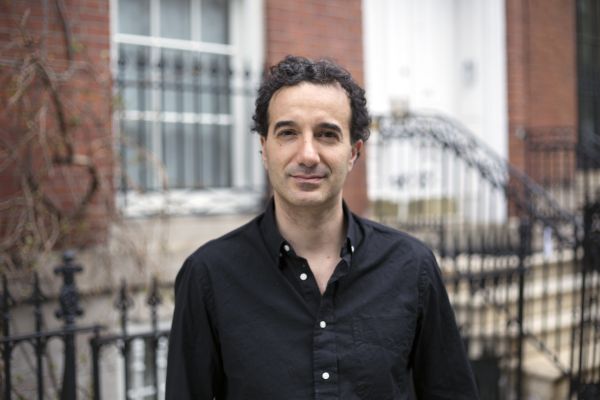
Please join us on Monday, April 13, 2026 for an evening with Jad Abumrad.
Democracy Summit 2026 Schedule
Tuesday, April 14, 2026
9:30 AM - 10:50 AM
-
University Center (UC) North Ballroom
From Isolation to Action: Building Communities of Belonging, Healing, and Action
Casey Dunning
Social connection does not happen by accident—it is built through intentional practices, shared experiences, and relational leadership. This experiential workshop introduces a practical model for building community and strengthening democracy by cultivating communities of belonging, healing, and collective action.
Drawing on the work and stories of Missoula Interfaith Collaborative (MIC), facilitators will share how service programs that provide food, shelter, housing support, and employment also function as relational ecosystems. Through practices such as daily Morning Gatherings, monthly Community Meals, shared recreational activities, and building leaders focused on kinship, MIC weaves relationships across class, race, and generation. These relationships become the foundation for healing from isolation and for organizing people to act together to improve their lives.
Participants will engage in guided activities that mirror these community-building practices, offering opportunities to practice listening, trust-building, and connection across difference. Together, we will explore what makes connection easier or harder, how social bonds support well-being and civic life, and how institutions can move beyond transactional models toward relational cultures.
This session is designed for people seeking stories of and a model for, strengthening social connection and building community.
-
University Center (UC) South Ballroom
Building Bridges & Fostering Belonging
Heidi Wallce and Rajiem Seabrook
Building Bridges & Fostering Belonging invites participants to explore how self-awareness, culture, and lived experience shape the ways we lead, engage, and build relationships across difference. Through guided reflection, storytelling, and dialogue, this interactive session examines the complexities of human experience and the cultural lenses that influence participation, decision-making, and community life.
Participants will deepen their understanding of personal and collective identities while practicing skills that promote empathy, active listening, and mutual understanding. By centering narrative and shared learning, the session highlights how bridge-building strengthens social capital, builds trust, and reinforces the interconnectedness of our wellbeing and collective liberation—foundational elements of meaningful civic engagement.
Emphasizing belonging as both a practice and a pathway to collective action, the workshop invites participants to move beyond individual awareness toward shared responsibility and participation. Participants will leave with practical strategies for fostering inclusive spaces, strengthening relationships across difference, and contributing to resilient communities rooted in connection, collaboration, and shared purpose. Aligned with the theme Together We’re United, this session affirms that belonging is essential to building communities where everyone has a voice and a role in shaping the common good.
-
University Center (UC) 326
From Isolation to Social Connection: Designing Service Learning Courses that Strengthen Democracy
Andrea Vernon
Service learning is a course-based form of community engagement that intentionally links academic learning outcomes to community-identified priorities through reciprocal partnership and structured reflection. In an era marked by disconnection and polarization, well-designed service learning helps students practice the habits a healthy democracy requires: listening across differences, collaborating toward shared goals, and translating knowledge into public problem-solving. This 80-minute interactive session blends a brief, research-informed framing with a hands-on workshop for faculty. Participants will clarify what service learning is (and is not), how it differs from volunteering, internships, and other experiential activities, and what course design elements are associated with stronger student learning outcomes (alignment to curriculum, community voice, and intentional reflection). Then, using a guided template, participants will workshop one of their own courses to add a service learning component: a community partnership concept, a service activity tied to one learning outcome, a reflection assignment, and a simple assessment plan that generates usable evidence for continuous improvement. Participants will leave with a one-page “ready to pilot” course blueprint, sample reflection prompts, and strategies for building social connection through reciprocal partnerships that benefit both students and communities.
-
University Center (UC) 327
Gemeinschaftsgefühl and The Pursuit of Happiness
Dylan Wright and Tammy Tolleson Knee
Alfred Adler’s concept of Gemeinschaftsgefühl, often translated as “social interest” or “community feeling,” encourages us to consider the power of connection in individual well-being. While the "pursuit of happiness" is often framed through individual achievement, research suggests that sustainable flourishing in personal, educational, and professional settings stems from a deep-seated sense of belonging and a contribution to the common good. These qualities form the foundation of civic participation and a healthy democracy.
This presentation explores how Gemeinschaftsgefühl guides practical ways of strengthening personal well-being while contributing to social transformation through engagement with others. Drawing on the work of the Center for the Advancement of Positive Education (CAPE), the session highlights how well-being practices grounded in social interest are being applied across educational and community contexts through:
- Fostering Prosocial Environments: Creating spaces at work in personal, academic and professional settings that prioritize relational health.
- Cultivating Contribution: Nurturing our innate desire to cooperate and give back to our communities.
- Building Sustaining Connections: Understanding how social interest acts as a buffer against isolation, protecting our capacity to remain engaged citizens.
Attendees will leave with a reclaimed understanding of well-being and the pursuit of happiness, not as a fleeting emotion, but as a practice of connection that extends from self to community creating a greater sense of meaning and purpose.
Time to Let Your Diamond Shine: Moving from Isolation to Social Connection Through Curiosity, Humor, and Human Intelligence (HI)
Raymond H. Orcutt and Meegan Kriley-Mackay
This is an interactive, experiential session designed to encourage a deeper understanding of the rule of law and its connection to our democratic system. Participants will be put into groups of 4-5 and each group will be given a set of seven Jenga blocks labelled with the foundational principles of the rule of law: Independence, Equality, Transparency, Fairness and Consistency, Participation, Human Dignity, and Due Process. Participants will also be given a more detailed description of each of these principles.
Using these Jenga blocks, participants are tasked with building a two-story structure with the first story constructed of the principles consider most foundational. In deciding how to build their structure, participants are encouraged to engage with the principles, discuss what the principles mean in real life, understand how they intersect with each other, and explore the importance of these principles to our democratic system. As in any Jenga game, the next step will be to remove a block. The participants will have to discuss which principle can be removed and why. The activity will close with each group sharing how they built their structures, which principles they considered most foundational, and which principle they elected to remove.
-
University Center (UC) 330
Art as a Pillar of Democracy
Cameron Green and Krys Holmes
The current rupture in democratic practices, coupled with a waning trust in institutions, has brought upheaval to the nation’s cultural flagships, including the National Endowment for the Arts, the National Endowment for the Humanities, and the Kennedy Center for the Performing Arts. Recent efforts to reorganize these national pillars along partisan lines do not happen in a vacuum; rather, they represent a reclassification of the arts away from a public policy priority. This shift ignores the power of creativity to nurture what President John F. Kennedy called 'the Great Democrat'—the essential force that sustains a free and flourishing society.
Using the current state of these national pillars as a bellwether for where our democracy stands, this salon reframes the arts as an 'and statement' rather than a conflicting priority. We argue that the arts are an essential asset in addressing our most pressing issues, from social isolation and suicide prevention to the dissemination of accurate health information. Unlike the political and economic spheres, which are often mired in 'either/or' dichotomies of winners and losers, art is a generative force that expands through influence and inclusion—modeled by the synthesis of classical and jazz traditions.
This session brings together cultural stewards to discuss why public support for the arts is not merely about funding production, but about ensuring democratic access to expression. By exploring the tension and triumph in works ranging from Casablanca to the contemporary protests of Colin Kaepernick, we demonstrate that when the arts thrive, democracy thrives. Ultimately, this salon offers a call to action: attending and supporting local arts organizations is a fundamental act of defending democracy and empowering collective social wellbeing.
-
University Center (UC) 331
The Hidden Curriculum: Making Belonging Visible in Democratic Spaces
Charity Atteberry and Peter Donaldson
Democracy relies on meaningful participation, shared understanding, and social connection. Yet participation is rarely neutral. It is shaped by unspoken rules, norms, and expectations that are unevenly distributed and often unnamed. These “hidden curricula” quietly signal who belongs, who feels confident enough to engage, and who is left navigating civic, academic, and community spaces without a map.
This interactive session will invite participants to examine how the hidden curriculum operates across educational, professional, and social contexts—and to consider what becomes possible when the invisible is made visible. Through experiential activities, case studies, and guided reflection, participants will surface implicit norms related to communication, power, and social capital, and explore how these norms can simultaneously enable participation for some while constraining it for others.
Participants will engage in hands-on exercises that reveal hidden rules and assumptions, experiment with translation and reframing, and map their own discourse communities to better understand how access to information, relationships, and language shapes connection. The session will conclude with a practice-oriented reframing that invites participants to identify intentional roles they can play—such as decoder, translator, bridge-builder, or wayfinder—to reduce friction, ease participation, and foster trust.
This session will emphasize collective meaning-making and shared responsibility for designing democratic spaces where more people can fully belong and meaningfully participate.
-
University Center (UC) 332
Creating Inclusive Learning Spaces
Jennifer Schoffer Closson
Neurodiversity means that we all think differently. Neurodivergence means we have something that sets our thinking apart from others, maybe ADHD, autism, dyslexia, anxiety, etc. Statistically, 20% of our campus is neurodivergent. We NEED neurodivergent brains in our community and leadership to keep propelling our society forward.
Making safe space for everyone to learn and share is essential in our rapidly changing culture. During this workshop we will learn how to 1) create community guidelines for our courses, 2) connect with our students, even those online, to learn about their specialized situations and set them up for success, 3) create accommodations (even if they are not requested through ODE) for unique learners, and 4) develop in-class activities that foster real human connection.
Attendees will need to bring a laptop as we will all walk away with tangibles.
Creating Community in Non-Traditional Students from UM Housing
Cate Davick
This interactive workshop explores the unique challenges and opportunities for building community among non-traditional students, from the perspective of two students in elevated leadership positions within UM Housing, tasked with mentoring Village and Community Assistants in fostering community.
We will begin by identifying the specific factors that make connecting harder for non-traditional students at UM, such as juggling family, multiple jobs, mental health resource access. This analysis, which directly addresses the proposal question, "How can connection strengthen civic life and personal or community well-being?", will be grounded in peer-reviewed research that highlights how UM Housing trains and fosters community within this demographic.
The second half will transition into a practical, 20-minute activity where participants will act as village/community assistants. Given a specific non-traditional student demographic profile (e.g., veteran students, student-parents), groups must design an event or program that actively builds social ties, strengthens well-being, and bridges divides, directly responding to the question: "What can we practice together that builds trust and bridges divides?"
This session offers insights for institutional support and community resilience, demonstrating how tailored social programming can enhance belonging, persistence, and civic engagement for a vital student population
-
University Center (UC) 333
Please Forgive Me: I'm A Recovering Millennial
Nicole Krause
Bridging generational and ability-based divides requires more than goodwill—it demands skill, honesty, and intentional practice. This interactive workshop equips participants with practical tools to connect across age, experience, rank, and ability in ways that build trust and sustain unity.
Designed for leaders at every level, the session blends self-reflection and peer collaboration. Participants will begin by examining their own communication styles, values, and power through reflection and recommended assessments. From there, they will learn to recognize and engage differing perspectives without flattening differences or defaulting to stereotypes. Through structured activities, participants will practice translating values, navigating power dynamics, and building diverse, strategic networks that include those who are similar, different, newer, and more tenured. The workshop emphasizes that titles may hold power, but they do not define value—and that leadership is exercised in every position through listening, influence, and self-efficacy.
By the end of the session, participants will be equipped to communicate more effectively across generations and abilities, use power and influence responsibly, and intentionally design relationships that strengthen trust and democratic participation. Unity, here, is not performative—it is practiced, honest, and built to last.
-
University Center (UC) 170 A/B
How We Open The Door
Amy Ragsdale and Mike Sweet
This participatory workshop would begin with teaching bits of several easy-to-learn dance styles, that lead into a discussion about barriers to social connection and how activities like dance combat loneliness and alienation, bridge divides and potentially broaden perspectives, thereby building diverse but connected and engaged communities.
We three are members of The Converge Foundation (TCF) and dancers by profession or avocation. Amy will start with an improvisational exploration of basic movement principles, space (pathways), time (tempo), effort (energy). Tarn will introduce African dance and Mike will finish with a circular French Bal Folk dance, progressing from individuals sharing space to several groups to a whole. Participants will have the opportunity to experience different community dynamics, providing seeds for discussion.
TCF was created to support a city-owned community hub - The Currents Center, which does not yet exist - with the conviction that recreational and cultural activities provide avenues for building connections between people, of all ages, abilities and backgrounds. This is vital in this time of divisiveness and community disintegration and disillusionment. Personal, emotional investment in one's community and its members leads to greater civic engagement and empathy.
11:00 AM - 12:20 PM
-
University Center (UC) North Ballroom
From Classroom to Community: How Community-Based Learning Builds Social Connection and Civic Life
Cara Rathke and Lorraine Clarno
Social connection is foundational to a healthy democracy, yet many communities struggle to build strong connections between schools, local organizations, businesses, and civic life. This interactive session explores how intentional partnerships can strengthen relationships, foster civic engagement, and connect students with meaningful opportunities in their own communities.
Led by the Community Involvement Coordinator for Kalispell Public Schools and the President/CEO of the Kalispell Chamber of Commerce, this session highlights ways community members, educators, and local leaders can work together to support youth through career exploration, classroom speakers, service learning, and extended learning experiences.
Through discussion and real examples, participants will explore how schools can serve as hubs for community connection and leave with actionable ideas for building partnerships that strengthen belonging, reduce isolation, and broaden access to opportunity.Fostering Social Connection Through Electoral Transparency
Annie Zavitz, Nicole Rowsell, and Sarah Cooper
In 2024, the Mansfield Center, in partnership with former President Jimmy Carter’s not-for-profit organization, launched the 猎奇重口 Election Observation Initiative (MTEOI) to strengthen voter confidence, electoral transparency, and political participation.
Drawing on lessons from observing 猎奇重口’s 2024 and 2025 elections, this session explores how social connection serves as both the foundation and outcome of nonpartisan election observation, and why these connections are essential for building trust in elections. The opening presentation will outline how election observation missions are structured, highlighting how collaboration with local partners, constructive engagement with election offices, and transparent communication with media builds trust across communities.
Following the presentation, attendees will have the opportunity to ask questions of representatives from MTEOI, the Mansfield Center, and the Carter Center and participate in a hands-on election observation simulation. Participants will then be given a scenario and will to work together to submit a practice observation through MTEOI’s primary data collection tool, ODK Collect. This interactive exercise highlights the collaborative nature of election observation, giving participants a first-hand experience of how civic engagement and social connectedness can strengthen democracy and foster community resilience.
-
University Center (UC) South Ballroom
Civically Engaged: Choosing Dialogue Over Conflict
Trey Kinamon, Buddy Wilson, and Rylin Wilde
Turning Point UM and College Democrats may have a lot of differences, but leadership in both clubs agree on one thing; college campuses are supposed to be safe places for students to grow and learn. Ideas are supposed to be exchanged and a university is ultimately a mixing pot of philosophies. But recently, it has felt that these ideas are under scrutiny.
The issue? Students are not participating in dialogue or open conversations, instead, they listen to outside sources rather than the direct source itself. Students need to come together to have a conversation and understand that it is okay to disagree because that's what makes campuses so unique- So many ideas, stories, philosophies, and morals, coming together to create a community. But as we live in trying times, it is important to stay present in mindfulness.
Turning Point UM and College Democrats are excited to lead the charge in creating a community rooted in conversation, dialogue, and mutual understanding. In this panel, moderated by ASUM President Buddy Wilson, Trey Kinamon and Rylin Wilde will have an open dialogue to show that no matter the difference in values, they both still love this community, university, and Griz
-
University Center (UC) 326
How Playing Games Builds Resiliency
Michael Cassens
We play games because they are fun, build community, and bring us closer together. Playing games is often seen as a way to escape real life. It's a way to remove oneself from the barrage of the current news cycle and the everyday stressors.
However, sometimes games can be a stressor, especially for competitive athletes. Competitive athletes must play in an intense team environment, where each team member is assigned a role, and the team's success or failure depends on mutual reliance. These types of pressures require a level of trust and connection that goes beyond just practicing and playing in a match.
Grizzly Esports actively seeks to create a community-first environment where student-athletes are treated with respect, given a voice, and allowed to work together to find solutions.
In this session, students will discuss their experiences within the team and, more importantly, how they have translated these experiences into their everyday lives. They will talk about how their experiences go beyond gaming, how it is much more about their community of friends, and how that has helped foster resilience.
A Beginning in Birmingham: Vincent Harding, Martin Luther King, Jr., and the Importance of Meeting with Your Enemy
Tobin Miller Shearer
This exploration of the behind-the-scenes negotiations that concluded the 1963 Birmingham campaign and opened the way to the passage of the 1964 Civil Rights bill reveals the curious but essential contributions of Black Mennonite activist Vincent Harding, his relationship with Martin Luther King, Jr., and the involvement of the Anabaptist community in the long-Black, freedom struggle. The interactive session examines in particular the method and philosophy used to bring enemies together at a negotiating table to pursue a common agreement.
-
University Center (UC) 327
From Belonging to Action: Social Connection, Climate, and Democracy in Practice
Shanti Devins and Sarah Lundquist
This interactive workshop, co-hosted by Families for a Livable Climate and Climate Smart Missoula, explores how belonging and social connection are not only essential to personal wellbeing, but foundational to effective climate action and a healthy democracy.
Through short facilitator presentations, personal storytelling, and interactive activities, we’ll examine why climate is so often placed on the “back burner,” why it is both urgent and inseparable from the challenges communities face right now, best practices for successful climate communication, and how collective action creates leverage and strengthens democracy.
Participants will practice using personal stories to build trust across differences, learn what’s already happening locally around climate advocacy and solutions, and explore multiple “entry points” into democratic participation—from public comment, local organizing, and becoming a climate ambassador, to intergenerational leadership and coalition-building. The session will culminate in hands-on reflection and individual action planning, helping participants identify meaningful next steps and connect with opportunities for ongoing involvement. Together, we’ll experience how connection fuels courage, resilience, and the collective power needed to shape a livable future
-
University Center (UC) 330
Democracy Across Borders: Why International Connection and Perception Matter
Heath Voy
At a time of rising polarization and global uncertainty, democracy depends not only on institutions, but on relationships. International students at the 猎奇重口 represent future leaders, diplomats, entrepreneurs, and cultural ambassadors. Yet many report difficulty forming meaningful social connections with American peers. When isolation persists, opportunities for mutual understanding—and long-term democratic trust—are lost.
This interactive session invites participants to move from passive awareness to relational practice. Following brief personal reflections from international students on moments of isolation and belonging, attendees will engage in facilitated small-group exchanges with international students. Through guided dialogue, cultural storytelling, and shared reflection, participants will examine common misconceptions, explore barriers to connection, and practice curiosity across difference.
Grounded in research on social trust and cross-group contact, the session emphasizes that everyday relationships shape how nations perceive one another. Participants will leave with renewed optimism about global collaboration, a deeper understanding of how interpersonal openness strengthens democratic resilience, and concrete steps to foster ongoing connection on campus. By strengthening ties between domestic and international students, this session models how local relationships can contribute to a more connected and cooperative global future.
Where We Learn, Who We Become: Pedagogical strategies to foster social connection and democratic engagement
Dana Fitz Gale and Kim Reiser
Our thinking on democratic education is guided by the critical pedagogy of place (Gruenewald, 2003) and active learning that helps citizens engage in their communities (Westheimer & Kahne, 2004). This faculty-led panel will showcase democratic teaching approaches that strengthen social connections through place-based learning and civic engagement.
The freshmen in Fitz Gale’s GLI seminar read banned books and participated in student-led book clubs that prioritized “respect for the thoughts and humanity of others” (Morrison, 2008, p. 59). To engage with the community, these UM students hosted a “FREADOM CAFE” at the Missoula Public Library, where they distributed free books and exhibited their own book-inspired artwork, posters, and poetry.
Within her Visual Rhetoric course, Reiser’s undergraduates utilized theoretical frameworks to investigate how public images can disempower or empower particular people. Reflective class assignments connected students to local spaces such as art museums, downtown murals, Indigenous landmarks, and local living memorials. Reiser finds that allowing space for students to explore controversial issues creates local engagement and attachment (Thornton, Graham, and Burgh, 2021).
Sun partnered with the Flathead Nation and other UM researchers to develop Pathways to Wellness. Centered on Sicstmist (‘do one’s best’ in Séliš), this program for indigenous children foregrounds values of—Yoywals (resilience), Puteʔstxʷ (respect), Xʷc̓štwexʷ (reciprocity), Nputeʔtn (reverence), and Kʷše Olqʷšiʔit Esyaʔ (responsibility). Students learn about Xʷc̓štwexʷ, the foundation for building relationships with oneself, others, and nature. Through drawing and journaling, children express kinship with their community and their sacred landscape.
Thomas (2022) called for a new paradigm of education based on democratic values and participatory citizenship. Our panel will explore how democracy can be cultivated through place-based, humanistic pedagogies rooted in literature, art, community values, and civil dialogue.
-
University Center (UC) 331
Disagreement for the Sake of Heaven: Creating dialog amidst controversy, informed by Jewish traditional practices
Laurie Franklin
Democracy requires us to welcome multiple understandings of life, ethnic and religious orientations, and political perspectives. When we force everyone to accept a single, approved view, whether in our educational systems or civic life, we abandon the realm of democracy and enter the dangerous rigidity of authoritarianism. We may not always agree, but we can appreciate each other’s humanity and begin to understand our differences in a caring, respectful way. Finding a way to talk to each other across our differences is a precious tool for establishing common ground, affirming neighborly love, and sustaining democracy.
In this interactive session, we will explore how to engage when we disagree by considering Bible, rabbinic commentary, and contemporary sources about the qualities of argumentation. We will employ a time-tested model of Jewish learning called “havruta”, an ancient practice of learning with a partner.
The word “havruta” derives from the three-letter Aramaic root for “friend”. Sometimes “havruta” partners agree and sometimes they don’t. Their discussion helps them sharpen their thinking but doesn’t necessarily lead to agreement. Judaism upholds the value of “disagreement for the sake of heaven’, that is, examining our differences with the sense that they are holy and bring us closer to divine intention.
Democracy is messy. It asks us to accept simultaneously contradictory ideas without paralyzing civic life. In our workshop, we will consider how to apply these practices in a secular context, that is, how to achieve the higher purpose of finding common ground even in disagreement.
The workshop will open with a presentation, followed by timed discussion in dyads based on traditional and contemporary sources, and conclude with a summary of our observations and learnings.
-
University Center (UC) 332
Neurodivergent Inclusive Living Communities How Student Government Has Shaped Community at The 猎奇重口
Hailey Quam
Neurodiversity refers to natural differences in how people think, learn, and communicate, challenging the idea that there is one “right” way to think. These differences do not reflect intelligence; instead, neurodivergent individuals, like neurotypical peers, have unique strengths and challenges. Supporting neurodiverse students involves intentional, respectful communication strategies. Redirection can ease uncomfortable moments, while explaining the “why” behind social expectations strengthens understanding. Social proverbs offer quick, concrete guidance, and gently insisting on topic changes can prevent misunderstandings. Asking whether someone is being “helpful or hurtful” encourages clarity and reflection.
Neurodiversity‑affirming practice centers on presuming competence, promoting autonomy, respecting all communication styles, tailoring supports, valuing neurodivergent voices, honoring culture, and using a strengths‑based lens. Connection grows through kindness, curiosity, and openness to others’ interests. Campuses can foster belonging through resources such as the Neurodiverse Student Union and Allies, the Office of Disability Equity, MOSSAIC, and interest‑based clubs. Ultimately, embracing neurodiversity means recognizing and celebrating the unique strengths each person brings to a community
-
University Center (UC) 333
Designing Our Future Together: Community Engagement and Trust Building with the City of Missoula
Ashley Brittner Wells and Haley Erickson
We want to hear from you! But how do we do that? City of Missoula planning processes and Neighborhood Councils strengthen democracy through social connection. This session will illustrate the value of City planning processes, meeting the community where they are, and the ways you can give input to the policies that affect your life. Learn how community members and City staff build connections and trust at our events. Planning together provides space for shared problem-solving and deliberation. Hearing from your neighbors may help build connections and understanding. Participating in City neighborhood councils and policy development can create a sense of ownership in the local government process.
When planning community events, the City considers barriers that make it difficult to engage and works to make it easy. We often provide meals, childcare, and multiple meeting times to bolster participation. We work to provide pertinent information, so community members understand how to provide input, how the project affects them, and what we do with what we hear.
Come engage in a fun small-group activity, connect with other participants over a community problem, and make decisions together, all in service of a great community outcome.
International Social Connection Through the Peace Corps
James Burchfield and Mary Younger
This presentation and group workshop on stimulating social, international connections via an association with Peace Corps Volunteers will describe how the experience of the Peace Corps can supplement other community-based initiatives for cross-cultural understanding. Participants will learn through two brief presentations and small group discussions how to build ongoing relationships with people from other nations that lead to inclusive, democratic processes. Peace Corps Volunteers have universally learned mutual respect for people and cultures different than their own, and this knowledge and lived experience opens doorways for lifelong commitments to supporting community building across diverse communities. With the 猎奇重口 demonstrating a strong representation of its alumni within the Peace Corps, there is a tradition of UM students extending themselves into social connections that counter trends being observed today of individual, insular behaviors. During the workshop portion of this event, small group deliberations will allow participants to discover and consider ways that existing and returned Peace Corps Volunteers can contribute to the social fabric of the University and the Missoula community.
-
University Center (UC) 170 A/B
The Grid: The intersection of Acceptance & Truth in Building Authentic Relationships
Bob Reid
"The Grid: An Intersection of Acceptance & Truth in Building Authentic Relationships”
Participants are invited to four different activity experiences, followed by discussion. “The Grid” will focus on how interactions with low or high levels of Acceptance and Truth affect our ability to live in authentic relationships.
Quadrant 1: High Acceptance + No Truth
Activity: Noise makers, candy, confetti, yo-yo's etc. Non-stop playful activities.
Socially: Letting others be, No giving or receiving feedback.
Quadrant 2: No Acceptance + No Truth
Activity: Sitting quietly, looking at your feet.
Socially: No acceptance of those around you or from those around you, no speaking about what is important.
Quadrant 3: No Acceptance + High Truth
Activity: Judged challenge. Burpees, balance, saying the alphabet backwards, answering trivia, etc.
Socially: Only truthful critique is given. No accepting differences, attempts, or failure.
Quadrant 4: High Acceptance + High Truth
Activity: Imagined during debrief.
If you are both accepting and truthful in relationships, how might you set boundaries, respect values, appreciate differences, or listen well? Are there things that you can accept as a reality, but not accept as good for yourself or someone else? Addiction, abuse, injustice, etc. How can authentic relationships be built through both acceptance and truth?
Solidarity is an Action: Finding Ourselves and Our Purpose Through Civic Engagement
David Quattrocchi
Social connection is not just a feeling but a practice, a skill, and a source of democratic power. This interactive workshop explores how community organizing moves people from isolation into shared purpose, collective learning, and sustained civic engagement. Grounded in housing justice work alongside unhoused community members, participants will learn how trust, shared language, and collaboration are built over time, especially across difference.
Together, we will practice the organizing cycle: building relationships, identifying shared goals through listening, developing skills collectively, forming strategies to win change, and learning to adapt through both losses and victories. The session centers organizing with unhoused neighbors, where dignity, accountability, and trust are essential, and where historically marginalized communities are overrepresented.
Participants will leave with a lived understanding of what it means to return to public life with purpose — how to work together, move collectively toward shared goals, and see social connection as the infrastructure of democracy rather than a one-time action
-
Mansfield Learning Commons - Mansfield Library Level 3
Locating Community in Abstraction: A Conversation on Artificial Intelligence
Natalie Bond and Corinna Kirsch
In the spirit of strengthening democracy through social connection, this session seeks to create a space for robust and curious discourse around the varied perspectives towards, and interpretations of, artificial intelligence (AI) on the 猎奇重口’s campus. Inspired by Stanford University’s Digitalist Papers initiative, the session gathers 3 campus instructors from different scholarly backgrounds together in conversation about AI, asking them to imagine possible futures for the UM community through the lens of their disciplinary expertise. The dialogue will be facilitated, with time built in for a Q&A with the audience.
The presenters will collectively ruminate on AI’s impact on specific concepts related to both the human and student experience (agency, originality, relationality, curiosity) while surfacing their own individual and disciplinary approaches to AI. The session will provide a unique opportunity for cross-disciplinary, public AI dialogue with the sole purpose of exploring perspectives, without the expectation of generating policy or product. Creating space for curious, provocative conversations in the face of an enormously disruptive emerging technology thus specifically speaks to and embodies the theme of “the role of social connection in nurturing space for dissent and critical inquiry”, seeking resiliency in the collective.
Connection in Action: Building a Culture of Care Across the 猎奇重口
Pat Beckwith, Dylan Wright, and Cale Patenaude
Social connection is not just a wellbeing outcome it’s a practice embedded in everyday work, relationships, and institutional culture. This panel brings together members of the Wellbeing Advisory Group (WAG) to share how they intentionally build social connection and belonging into their roles across campus—and how WAG supports them in advancing a culture of care at the 猎奇重口.
Panelists will offer real-world examples of integrating connection into teaching, leadership, policy, student support, and community engagement, while reflecting on the power of cross-campus collaboration in sustaining this work.
-
University Center (UC) 225
From Isolation to Connection: Rebooting Human Intelligence (HI) in the Age of AI
Meegan Kriley-Mackay
In an era of unprecedented digital connection, many individuals report feeling more isolated, polarized, and disconnected than ever before. This interactive session explores how Human Intelligence (HI), our innate capacity for curiosity, empathy, critical thinking, and connection, can be intentionally “rebooted” to strengthen social bonds and democratic life in the age of Artificial Intelligence (AI).
Drawing from my book, Leadership in the Age of AI: Rebooting Human Intelligence (HI), this session blends neuroscience, human behavior, and real-world experience from crisis communication and human intelligence training. Participants will examine how fear, assumptions, and technology-driven shortcuts quietly erode trust, and how simple, practiced skills of inquiry and listening can reverse that trend.
Through guided reflection, paired dialogue, and a practical application of the 5 WHYs of Soft Interrogation (5YSI) framework, participants will practice moving from judgment to curiosity, from isolation to connection. The session emphasizes how social connection is not a “soft skill,” but a core democratic competency, one that enables dissent, strengthens civic engagement, and builds resilient communities across differences.
Participants will leave with tangible tools to foster trust, deepen connection, and create spaces where meaningful dialogue, and democracy, can thrive.
2:00 PM - 3:20 PM
-
University Center (UC) North Ballroom
Lessons from the field; an experiential workshop highlighting opportunities for understanding in real situations of public conflict
Josh Slotnick
How we step into a public conflict conversation has a powerful effect on the potential for further opposition or greater understanding.
We will use a case study of an actual issue that came before the County Commissioners to test the premise. The issue involves a business asking for a zoning change, a neighborhood group opposed to their proposal, and the 3-member board of County Commissioners. I will divide the workshop attendees into 3 groups, and each group will represent one of the interested parties (Business, Neighbors, Commissioners). I will supply each group with instructions - the background information required to play their role in the public meeting where the board of county commissioners decides the case. After a chunk of time to read the instructions and discuss within their groups, we will hold the public meeting. As the instructor I will officiate and guide the public meeting process. We will do 2 rounds of this. In each round the groups will get slightly different sets of instructions. We will check in after each round on each group’s attitude towards each other, how they physically feel, their level of perceived understanding of the other group, their willingness to double down on their position, compromise, or move in a new direction all together.
-
University Center (UC) South Ballroom
Community as Civic Practice: Lessons from LGBTQ+ Collaboration
Devin Carpenter and Emily Rokosch
LGBTQ+ individuals in rural and small-town communities often navigate limited access to affirming spaces, resources, and opportunities for connection. This panel brings together leaders from the Western 猎奇重口 LGBTQ+ Community Center, Missoula Pride, Queer Prom MT, and the 猎奇重口 Two Spirit Society to explore how organizations with distinct missions work collaboratively to strengthen community, belonging, and civic life.
Drawing on their shared experiences in Western 猎奇重口, panelists will discuss how intentional programming, relationship-building, and shared spaces support people across identities, generations, and lived experiences. From large-scale public celebrations to youth-centered events and culturally grounded advocacy, each organization plays a unique role in fostering visibility, safety, and connection. Together, they form an interconnected network of support that helps individuals build meaningful relationships and engage more fully in their communities.
The conversation will also highlight the opportunities and challenges of collaborative work, including navigating limited resources, sustaining volunteer leadership, and responding to evolving community needs. Participants will gain insight into how locally rooted LGBTQ+ organizations cultivate trust, resilience, and shared purpose, demonstrating how collaboration can strengthen social connection and democratic participation in rural contexts.
TAKE UP SPACE: Guerilla Gatherings on Public Lands
Devin Carpenter and Katie Condon
Public spaces, courthouse lawns, city streets, parks, and public lands, are more than physical locations. They are democratic infrastructure, where communities gather, express collective values, build relationships, and make civic life visible. Yet, many people experience public space as restricted, intimidating, or inaccessible, especially when organizing around identity, justice, or creative expression.
This session explores how intentional use of public space can strengthen democracy by fostering social connection, collective action, and community resilience. Drawing from real-world experiences organizing Pride celebrations, grassroots festivals, demonstrations, and informal “guerilla” gatherings, presenters will demystify the systems that govern public space and invite participants to reimagine them as sites of belonging rather than barriers.
Participants will learn how social ties are built through shared experiences in public, how navigating permitting processes can be an act of civic engagement (or disobedience), and how both legal and informal gatherings create opportunities for dialogue, visibility, and mutual care. Through facilitated discussion and reflection, attendees will connect their own experiences of public space to broader questions of access, power, and participation.
We invite you to imagine public space as a canvas for connection, one that when activated collectively, helps bridge divides, nurture civic identity, and reinforce the social foundations of a healthy democracy.
-
University Center (UC) 326
Creating Community For Students, By Students
Nia Guest, Lauren Van Cleaf, and Kelton Dick
A major aspect of UM Housing’s student staff is the development of exciting and engaging programs. Programs, or events, are designed to create a sense of community within floors, wings, and buildings. Programs can include anything from a “tag along” (walking with residents to a campus event), to a “Hall Brawl” (a building-wide event geared towards campuswide attendance). Each Residence Hall has a unique culture due to their residential demographics (year, interests, Living Learning Community). Democracy Summit participants will be grouped in one of nine tables based on data gathered from each of the nine Residence Halls. They will then be provided event parameters and intended audience, and get the chance to design an engaging program for that community.
All collected data and subsequent workshop experiences will benefit the Residential Curriculum as a whole. Rather than simply using a “one size fits all” approach to programming, Student Staff may be able to tailor events uniquely for their residents. This serves the greater purpose of informing how to best design programs to intentionally build community. In doing this, the goal of UM’s Student Staff is to build events for students, by students, with each of their unique interests in mind
-
University Center (UC) 327
From Isolation to Belonging: What a Village in North Macedonia Taught Me About Social Connection and Democracy
Abby Nelson
This session explores social connection not as an abstract ideal, but as a lived, emotional experience that directly shapes our ability to participate in community and civic life. Drawing from her experience as a Peace Corps Volunteer in rural North Macedonia, the presenter reflects on what it means to seek belonging as an introvert, a young woman, and a cultural outsider in a society where social connection functioned as currency.
Through personal storytelling, guided reflection, and small-group dialogue, participants will explore moments of isolation, visibility, and vulnerability — and how these experiences influence whether people engage, withdraw, or learn to self-censor to survive within communities. The session invites participants to consider how psychological safety, trust, and relational belonging shape both personal wellbeing and collective life.
Rather than focusing on ideology, this workshop centers the human conditions that make democratic participation possible: feeling seen, respected, and safe enough to be honest. Participants will leave with a deeper understanding of how tending to our own relational needs — including the courage to share our stories — is an essential act of collective care.
Strengthening Belonging in Community
Emily Rolston and Yasmin Acosta-Myers
Cultivating a sense of belonging and strengthening community connection are essential to a thriving democracy in an era of increased isolation, division, and disconnection. Communities are seeking new ways to build trust, restore relationships, and strengthen community wellbeing. This workshop invites participants into an interactive learning environment designed to slow down, connect deeply, and discover the power of belonging. The session centers relationship-building, reflection, and shared understanding as pathways for building trust and resilience.
Participants will engage in guided activities and dialogue to explore what belonging means in their lives and communities, identify barriers to and opportunities for connection, and deepen understanding across differences. Through reflection, paired conversation, and small-group discussion, participants will examine how everyday interactions, institutional practices, and community systems can either support or create barriers to belonging.
The session also introduces a network-based approach to community change, emphasizing the role of coordinated action, shared learning, and partnership in advancing solutions that no single organization can achieve alone. Together, we will explore how intentional connection can strengthen relationships, support civic life, and cultivate a sense of belonging that allows individuals and communities to thrive, while amplifying collective voice and shared resources to foster change.
-
University Center (UC) 330
New Approaches to Democracy Teaching and Learning
Scott Arcenas and Corbin Page
This session will engage audience members in an interactive demonstration of a new pedagogical approach and style called Third Way Civics (3WC) that instructors in History, Honors, and Democracy Studies are using in their classes, including in a new seminar on the Challenge of Citizenship. Part one of the session will feature a panel of students in conversation with Professor Scott Arcenas and Mellon Postdoctoral Fellow Corbin Page to introduce the 3WC approach and discuss how it fosters connection and encourages intellectual curiosity inside and outside the classroom. Part two of the session will invite audience members to participate in a 3WC-style conversation about the American Revolution and/or the US Constitution. The facilitators will select short, accessible texts that the audience will read and then discuss with each other. At the conclusion of the session, there will be time for guided reflection on the activity. Participants will learn how approaches such as 3WC build connections among students and help facilitate thoughtful, curious, and informed conversation on challenging topics and issues both inside and outside the context of specific courses.
Building Intergenerational Social Connections for DemocracyDelia Schmidt
The Mansfield Center aims to strengthen connections between generations of
civic leaders and volunteers. This workshop will bring together participants from a variety
of ages and backgrounds to engage in thoughtful conversation around the importance of
community. Our goal is to practice building relationships between youth and other
generations that students might not encounter frequently in a university setting, bringing
in perspectives from older adults who have or currently contribute to the Mansfield
Center and its programs. In this workshop, participants will be placed into mixed-age
groups and given a series of discussion prompts covering topics surrounding local
engagement, relationship-building, and the pillars and goals of the Mansfield Center.
-
University Center (UC) 331
The Rule of Law: Building Blocks of Democracy
Andrew King-Ries and Meri Althauser
This is an interactive, experiential session designed to encourage a deeper understanding of the rule of law and its connection to our democratic system. Participants will be put into groups of 4-5 and each group will be given a set of seven Jenga blocks labelled with the foundational principles of the rule of law: Independence, Equality, Transparency, Fairness and Consistency, Participation, Human Dignity, and Due Process. Participants will also be given a more detailed description of each of these principles.
Using these Jenga blocks, participants are tasked with building a two-story structure with the first story constructed of the principles consider most foundational. In deciding how to build their structure, participants are encouraged to engage with the principles, discuss what the principles mean in real life, understand how they intersect with each other, and explore the importance of these principles to our democratic system. As in any Jenga game, the next step will be to remove a block. The participants will have to discuss which principle can be removed and why. The activity will close with each group sharing how they built their structures, which principles they considered most foundational, and which principle they elected to remove.
-
University Center (UC) 332
Cultivating Community Partnerships for Holistic Student Success
Jonathan Carter and Dannette Fadness
Amid persistent budget constraints across higher education, partnerships are not optional; they are essential for the effective delivery of services. At UM TRIO Upward Bound, we leverage strategic collaborations across campus and throughout the community to expand access, deepen our impact, and better meet the holistic needs of first-generation and low-income high school students in Missoula and the Blackfeet Nation. By working closely with university departments and serving on local coalitions, our staff connect students with experts, resources, and opportunities that would otherwise be out of reach in their rural community. A Zoom conversation last summer with Senator Tim Sheehy helped our students understand the vital importance of public service and civic engagement for maintaining a robust democracy. This session highlights practical and replicable approaches to building meaningful partnerships that strengthen programs, maximize resources, and ultimately help students thrive. Join us to explore how collaboration can foster social connections, strengthen resilience and well-being, and transform what’s possible for student success.
All Aboard: Building Connections Through Passenger Rail
Dan Bucks and Dave Strohmaier
At a time when many communities feel increasingly isolated, passenger rail offers a powerful way to reconnect people, places, and opportunities. The Big Sky Passenger Rail Authority is leading efforts to expand and enhance passenger rail service across 猎奇重口 and the greater Northwest, advancing long-term economic, environmental, and social benefits for the region. Our mission is to restore safe, reliable, and sustainable passenger rail service across southern 猎奇重口, strengthening access to jobs, education, healthcare, and community while supporting the health and well-being of people across the state and beyond.
We invite college students and university faculty and staff to share their visions for how passenger rail can better connect people to one another and to essential services, improving quality of life across 猎奇重口. Join us at the Democracy Summit to explore how riding the rails can foster understanding, deepen civic connection, and help build stronger, more resilient communities for the future.
-
University Center (UC) 333
Museums & the Semiquincentennial: Democracy in Third Places
Molly Stockdale
In an opinion piece written when she withdrew a retrospective exhibit from the National Portrait Gallery, artist Amy Sherald said, “Museums are not stages for loyalty. They are civic laboratories. They are places where we wrestle with contradictions, encounter the unfamiliar and widen our circle of empathy.”
Molly Stockdale, Vice Chair of the 猎奇重口 250 Commission, talks about how museums are marking this milestone across the country. From marquee exhibitions to children’s programs to social media engagement, America’s museums are approaching the national birthday thoughtfully, creatively, and resiliently. Molly will introduce some surprising research on the semiquincentennial from the Nationhood Lab and New York Historical. She’ll also highlight projects in 猎奇重口 and beyond, considering how museums contribute to the strength of our ongoing American experiment.
Participants will enjoy small-group activities created by US museums to foster civic understanding and engagement.
Belonging Across Borders: The Science and Lived Experience of Social ConnectionOnila Narayana Mudalige Don
Social connection is a fundamental human need, yet the experience of belonging can differ greatly depending on culture, language, personality, and social context. In this session, the presenter shares personal experiences of living and studying in four different countries—Sri Lanka, Vietnam, South Korea, and the United States—to reflect on how social connection is formed, challenged, and sustained across cultures.
The presentation weaves lived experience with insights from existing neuroscience and psychology research on belonging, language, and social cognition. Rather than presenting original human-subject research, the session highlights well-established findings from the literature and connects them to real-world experiences of crosscultural transition, social isolation, and community-building. Particular attention is given to how language, cultural norms, and individual differences such as introversion and extraversion shape social engagement.
Experiences during the COVID-19 pandemic and periods of cultural adjustment illustrate how people adapt and seek alternative ways to connect when traditional social structures are disrupted. The session concludes with a question-and-answer discussion, inviting participants to reflect on their own experiences and consider how intentional social connection supports individual well-being, inclusive communities, and a healthy democracy.
-
Mansfield Learning Commons - Mansfield Library Level 3
What are our local news needs?
Lee Banville
Press Forward, a national, multimillion dollar effort to improve local journalism, has approved a 猎奇重口 chapter for its work. A group is organizing how the 猎奇重口 effort will work and what are our priorities. After a brief presentation of what we are currently planning, the group wants to engage with people to identify their concerns about the state of local journalism in 猎奇重口 as well as brainstorm about what might be some solutions. This dialogue will directly help influence the Press Forward 猎奇重口 effort.
What is empathy?Matthew Schertz
We often hear the word empathy, and may use the term ourselves, but what does it mean to be empathic? Does empathy require that we use our imagination? Is it a feeling that overwhelms us? Is empathy the mechanism which allows us to connect with other beings, or does empathy speak to the opaque nature or the self/other boundary? Is empathy something innate, or must it be learned through experience? Is being empathic necessarily good for us? Can it be potentially problematic? Is our understanding of empathy hampered by our tendency to get lost within binaries, like thinking/feeling and self/other?
This public dialogue will explore various positions on empathy in the hopes of reaching a better understanding of the ambiguous concept. While philosophy and psychology will provide is with insight into the phenomenon, it is my hope that together we can fluidly explore empathy through the lens of our collective experience.
-
University Center (UC) 225
Trust Me Film & Speaker
Rosemary Smith
“Free Press is an important piece of democracy. The Freedom of Press, of Speech, of Religion… is the first amendment to the Constitution. The only way to have an informed public is to have a free exchange of ideas and information. Any limitations on that … is considered an anathema to that value.” - Pulitzer NYT Journalist, Jeffrey Gettleman in “Trust Me”.
For Democracy to persist – to thrive, we must recognize our responsibility as citizen journalists. We must learn the standards that quality journalists use – by checking and confirming facts before sharing alarming misinformation; using some care for those who will hear or see our messaging; protect our credibility in sharing or “reporting” trustworthy information; and calling to attention disinformation to protect more vulnerable populations.
“Trust Me” brings awareness to peoples’ need for MIL to build resilience, lessen polarization, and preserve democracy quickly with one-hour, non-partisan film screenings. Discussion Guides, written by News Literacy Project then provide viewers with resources to empower themselves, their students, and their communities. The stories featured create viewer empathy for those traumatized by preventable crises aroused by online manipulation. Interviews with renowned experts suggest solutions to navigate misinformation, becoming “CredAble” and “ResponseAble” citizens.